The DMT Blog
Straight talk on ICF construction, foundations, energy efficiency and building in Simcoe County — written by the crew that does the work.
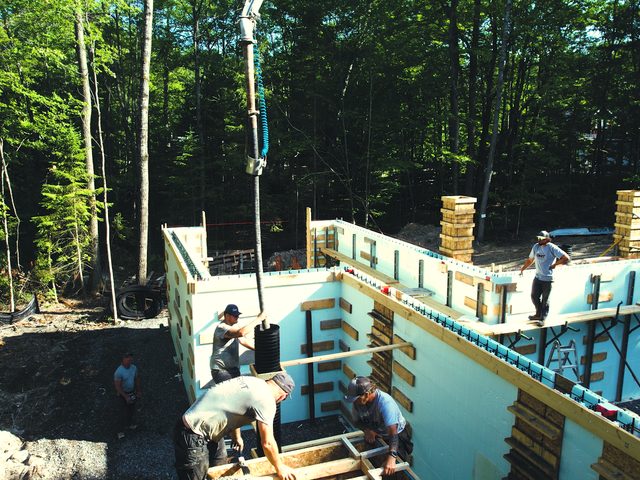
Pour Day: What Actually Happens When an ICF Foundation Gets Filled
A few hours, a truck on the clock, and a form you cannot open again. What has to be right first.
Read the post →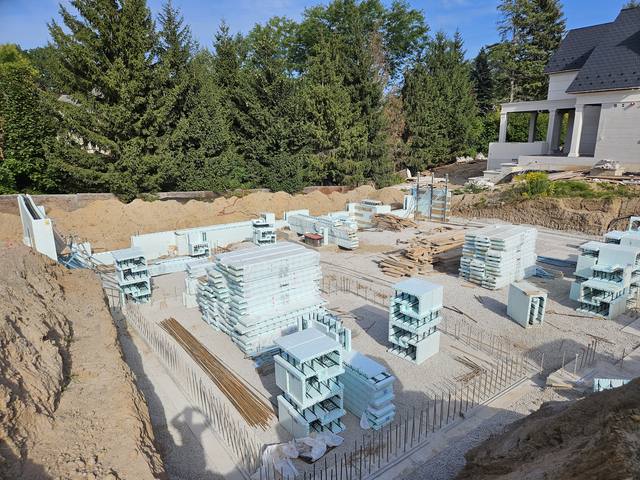
ICF vs Poured Concrete Foundation: What Actually Changes
An ICF foundation is poured concrete. The difference is the form — and whether it stays in the wall.
Read the post →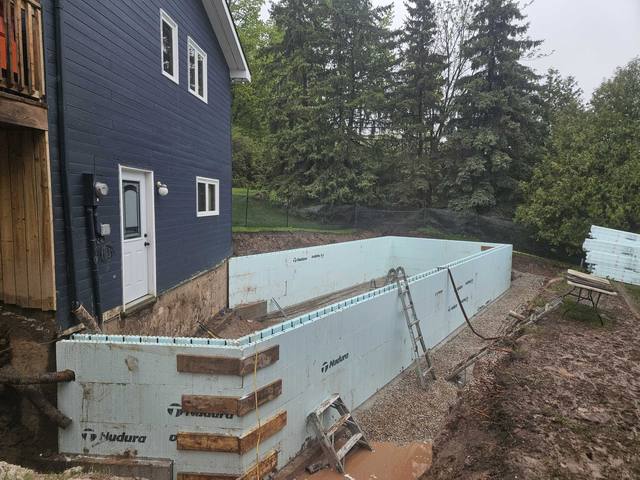
ICF Addition on an Existing House: How the Tie-In Works
The new room in an addition is almost always the coldest one. It doesn't have to be — here's how the footings, walls and tie-in actually work.
Read the post →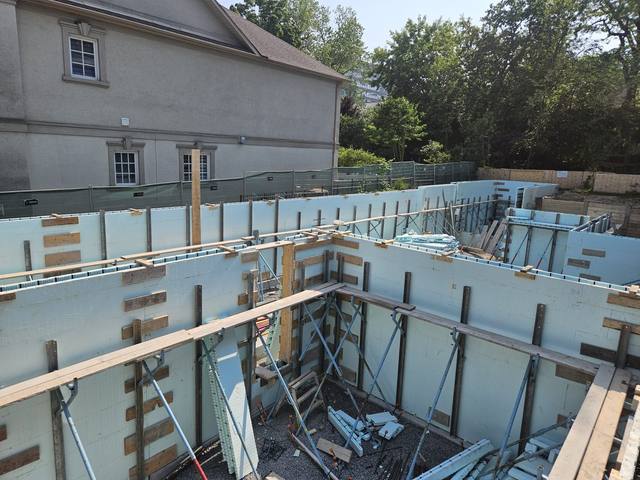
Do ICF Foundations Need Waterproofing?
ICF resists moisture better than bare concrete — but below grade it still needs damp-proofing, waterproofing and drainage. Here's what your foundation actually requires.
Read the post →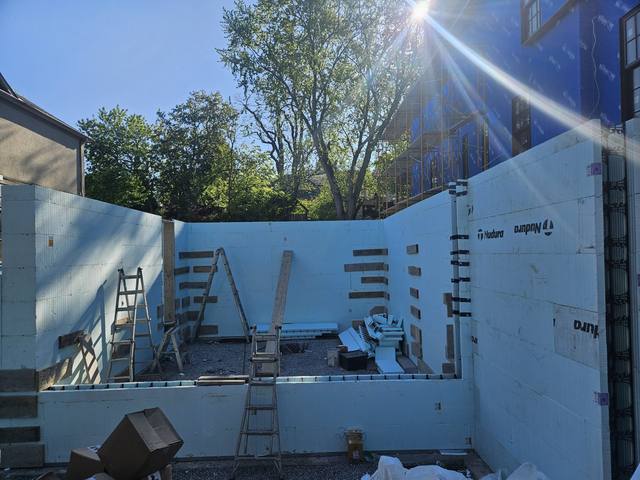
Can You Put Drywall Directly on ICF Walls?
Short answer: yes — and it's one of ICF's most underrated advantages. Here's how the finishing stage actually works on an insulated concrete wall.
Read the post →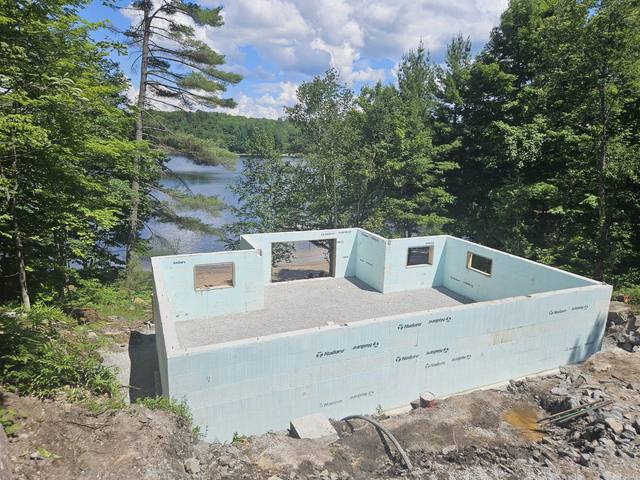
Are ICF Homes Really More Energy Efficient?
The R-value on the label is only half the story. What makes ICF homes cheaper to heat and cool is what's not in the wall: gaps, studs and air leaks.
Read the post →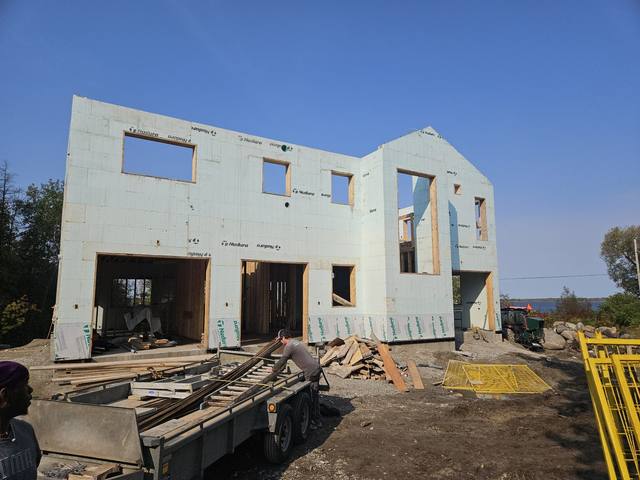
ICF vs. Conventional Framing: What R-Value Actually Tells You
R-22 to R-26 on paper — but the honest comparison between ICF and a framed wall isn't found on the label. Here's how to read the numbers like a builder.
Read the post →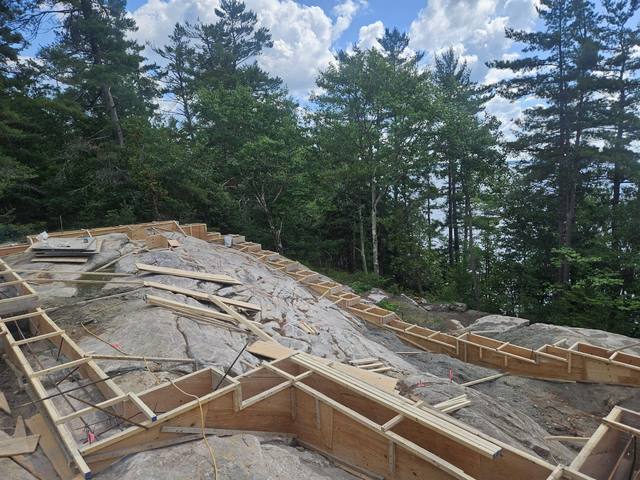
Footings on Bedrock: How It's Actually Done
When the excavator hits granite two feet down, the standard playbook stops working. Here's how footings get scribed, pinned and poured on the Canadian Shield.
Read the post →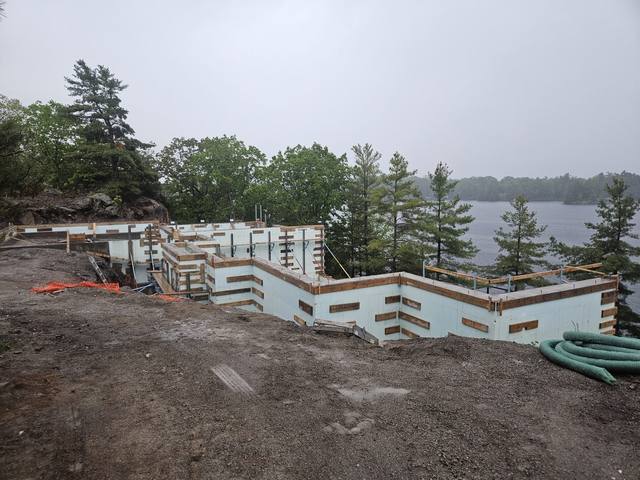
Building an ICF Cottage in Simcoe County & Muskoka: What to Know
Rock, water, winter and setbacks — cottage lots stack every difficulty at once. Here's what four-season ICF construction looks like north of Barrie.
Read the post →