Every wet basement we are called to has the same two candidates behind it: water that was never directed away from the house, or a wall that was damp-proofed when it needed to be waterproofed. They are different problems with different fixes, and the quotes for them look nothing alike.
Damp-Proofing Is Not Waterproofing
The black spray on most foundation walls in Ontario is damp-proofing. It slows moisture moving through concrete by capillary action. It is not designed to hold back standing water, and it is not a membrane.
Waterproofing is a membrane — sheet or fluid-applied — bonded to the wall and detailed at the footing, the corners and every penetration. It is built to resist hydrostatic pressure, which is what you have the moment water collects against the wall faster than it drains away.
Both get called “waterproofing” on quotes. If you are comparing two numbers and one is much lower, that difference is usually this one.
The Drainage Does Most of the Work
A membrane keeps water out of the wall. Drainage keeps water away from the wall, and that is the more important half.
Weeping tile at the footing, a clear stone bed, filter fabric that keeps the stone from silting up, a drainage board or dimple membrane against the wall, and somewhere for all of it to go — a sump or a gravity outlet. Miss any one and the rest underperforms.
The most common failure we open up is not a torn membrane. It is weeping tile that silted in because the fabric was skipped or wrapped wrong, so the water that should have drained sat against the wall for years instead.
Most Wet Basements Start Above Ground
Before anything gets excavated, the two cheapest fixes are grade and roof water. Ground should fall away from the foundation, and downspouts should discharge well clear of it rather than beside it.
A downspout dumping at the corner of the house puts more water against that wall in one storm than groundwater will deliver in a season. It is not unusual for that alone to be the whole problem.
Interior or Exterior — and When Each Makes Sense
Exterior is the real repair: excavate, clean the wall, repair cracks, apply the membrane, re-establish the drainage, backfill properly. It addresses the cause and it is disruptive and expensive.
Interior systems manage water that has already reached the wall — an interior drain to a sump. They are cheaper, they work, and they are the right call when excavation is impractical: a tight lot, a deck or addition over the wall, or a neighbour’s property too close.
What an interior system does not do is keep water out of the concrete. If the concern is the wall itself rather than the floor staying dry, that is an exterior job.
On a New Build, It Is Cheaper and Better
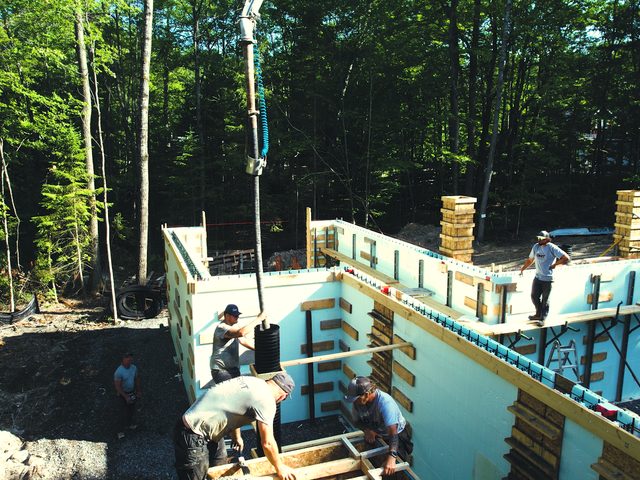
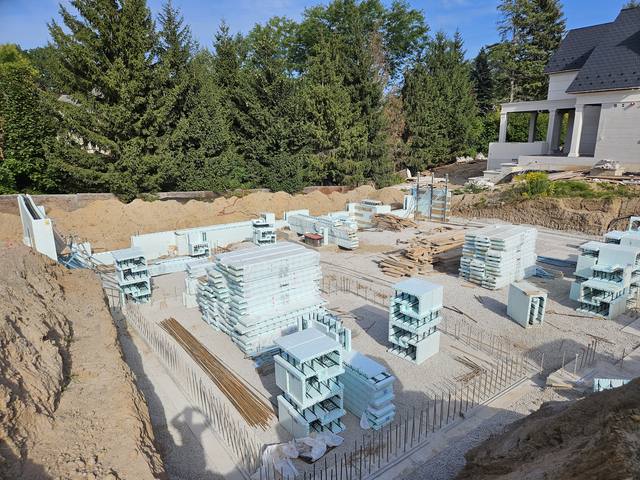
Every one of these details is straightforward on an open excavation and awkward afterwards. On a new build the membrane goes on a clean wall, the drainage is laid before backfill, and the backfill itself can be specified rather than inherited.
On an ICF wall there is a further advantage: the foam is continuous on both faces, so there is no cold concrete face on the interior for warm, humid air to condense against. That is a different problem from bulk water, and it is one people routinely mistake for a leak.
What Moves the Number
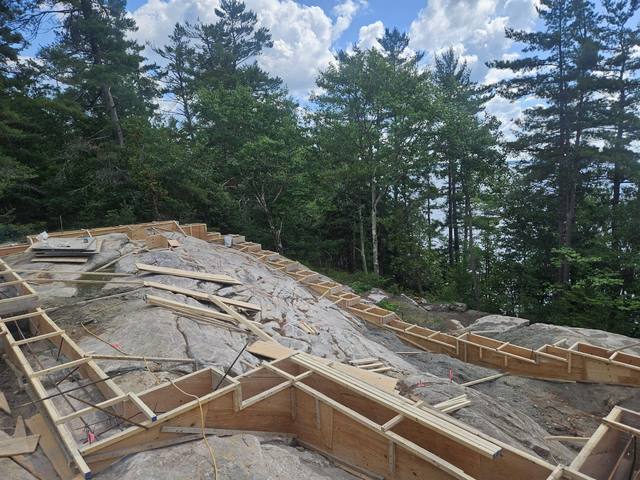
Depth of excavation, access for a machine, what the backfill is, how far the water has to travel to an outlet, and whether anything is in the way — a deck, a walkway, mature trees, a septic bed.
Those are site questions, not product questions. Two houses on the same street can price very differently and neither quote is wrong.
Common Questions
Is damp-proofing enough for an Ontario basement?
For a well-drained site it often performs adequately for years. It is not a membrane and it is not designed for standing water, so on a site with poor drainage or a high water table it is the wrong specification — not a cheaper version of the right one.
Can you waterproof from the inside?
You can manage water from the inside with an interior drain and a sump, which works and is far less disruptive. It does not stop water entering the concrete; it collects it once it has. Where excavation is impractical it is the sensible choice.
Why is my basement wet only after heavy rain?
That pattern usually points above ground rather than below it — grade falling toward the house, or downspouts discharging at the foundation. Both are cheap to correct and worth ruling out before anyone excavates.
Does an ICF foundation still need waterproofing?
Yes. The foam is insulation, not a water barrier, and the membrane and drainage details are the same as on any foundation. What ICF does change is the interior face: continuous insulation means no cold concrete for humid air to condense on.
How long does the work take?
An exterior repair on an accessible wall is usually measured in days rather than weeks, but access governs everything. We would rather look at the site than quote a duration from a description.