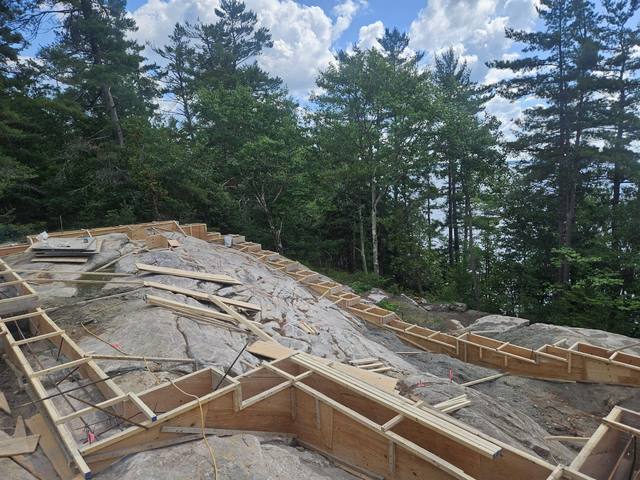
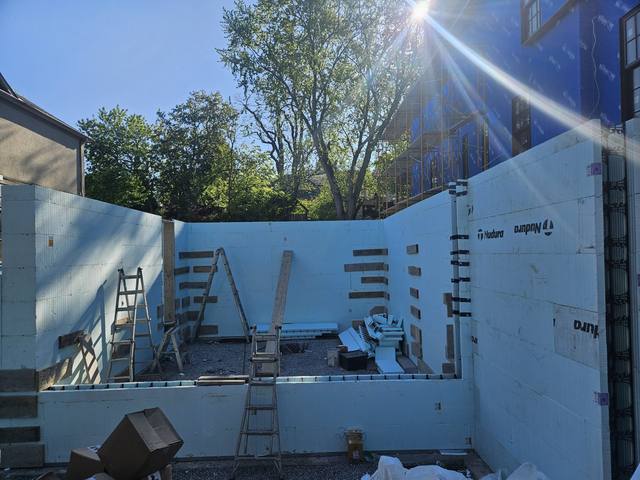
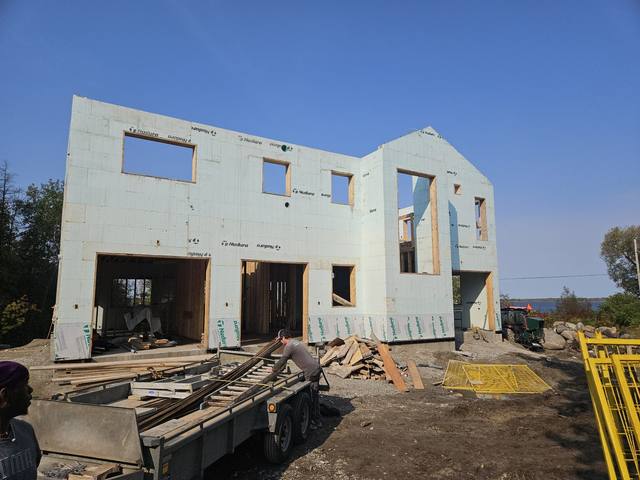
Short answer: yes. An ICF foundation resists moisture far better than a bare concrete wall, but the foam does not make the assembly waterproof on its own. Below grade, an ICF foundation still needs proper damp-proofing, waterproofing and drainage — the same water-management job every foundation has, done to suit the wall.
People assume the two layers of foam seal everything out. They don't. The foam insulates and protects the concrete; keeping water away from the wall is a separate job, and skipping it is how you end up with a "warm" basement that still smells like a basement.
What ICF already does for you below grade
Start with what you're not fighting anymore. An ICF wall is a solid, reinforced concrete core wrapped in continuous foam on both faces. Two things follow from that:
- The concrete is monolithic. Poured in controlled lifts, there are no block joints or cold seams for water to track through the way it can in a concrete-block wall.
- The exterior foam protects the concrete and moves the dew point outside the structural core, so the inside face stays warm and dry instead of sweating.
That's a real head start. It's why an ICF basement can be finished living space from day one instead of a cold, damp storage pit. But "resists moisture" is not "keeps out standing water and hydrostatic pressure." Rain, snowmelt and a high water table still push against the outside of that wall every spring.
What still needs waterproofing and drainage
Below grade, you're managing water in two ways, and ICF changes neither requirement:
- A moisture barrier on the wall. Damp-proofing (a coating that resists soil moisture) or full waterproofing (a membrane that holds back liquid water under pressure) goes on the exterior face. Which one depends on your site — a flat lot with good soil is a different problem than a wall sitting in clay or below the water table.
- Drainage that gets water away from the footing. This is the "stone and weeper" stage: free-draining granular backfill and a weeping-tile (perimeter drain) system at the footing that carries water to daylight or a sump before it ever loads the wall.
Ontario's Building Code requires below-grade foundation walls enclosing habitable space to be dampproofed — and fully waterproofed where soils drain poorly or the water table is high — with a perimeter drainage system at the footing, per the Ontario Building Code (O. Reg. 332/12). ICF doesn't exempt you from that — the wall assembly is different, so the detailing is adapted, but the water still has to be stopped and drained.
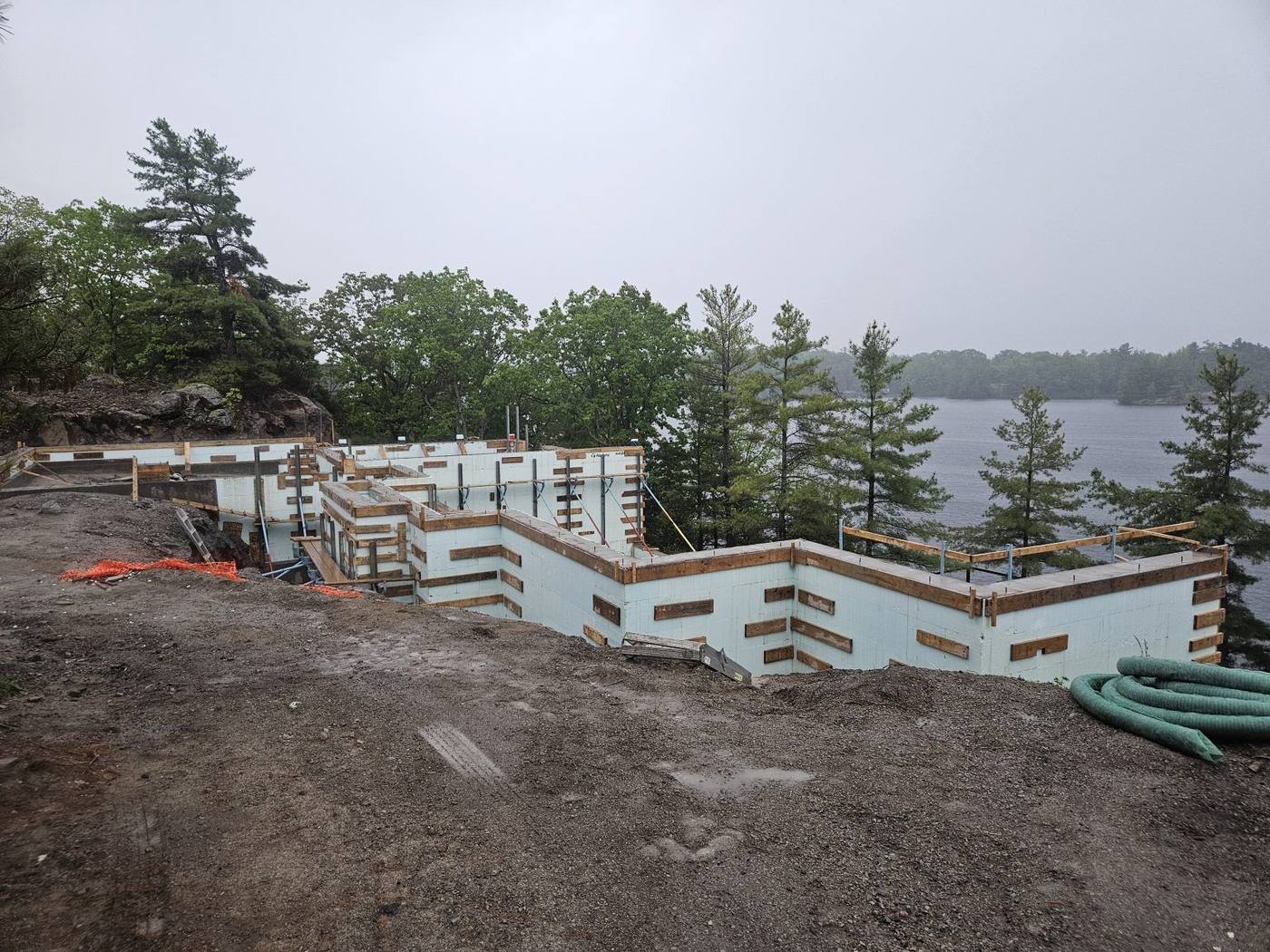
How the ICF-specific detailing differs
The principles are the same as any foundation; the execution is tuned to the foam:
- The waterproofing membrane or coating has to be compatible with the EPS foam face — some solvent-based products attack foam, so you match the product to the substrate.
- Terminations at the top of the wall, at window bucks and at service penetrations need to be detailed so water can't get behind the membrane.
- The drainage layer and weeping tile are sized and placed the same way, tied into the footing — which is exactly why footings and foundation get planned together, not as separate jobs.
Get those right and the reinforced core plus continuous insulation protects against frost, shifting temperatures and long-term wear — a wall built to stay dry, not just to look dry on handover day.
How DMT details a dry ICF basement
Foundations are DMT's bread and butter, and moisture management is part of the scope, not an afterthought. On a typical foundation, that includes the ICF walls braced and poured in controlled lifts, then waterproofing, damp-proofing and drainage detailed so the assembly meets or exceeds code for below-grade moisture protection. On engineered jobs like our Pebble Ridge footing-and-foundation package, the water-management layer is planned alongside the reinforcement and layout from the start.
Because the walls come out of the ground insulated and drywall-ready, the payoff of getting the moisture detail right is a basement that's genuinely warm and dry — see how the wall goes together in can you put drywall directly on ICF. If you want the full below-grade scope spelled out, that's our ICF foundations service.