ICF costs more than wood frame on the day you buy it. That part is not in dispute and we are not going to pretend otherwise. What matters is where that premium actually sits, what it removes from the rest of the build, and how much of it comes back — because the honest answer is that it depends on the house, and on which comparison you are making.
The crews who dread winter are usually the ones who have not planned for it.
Where the premium actually sits
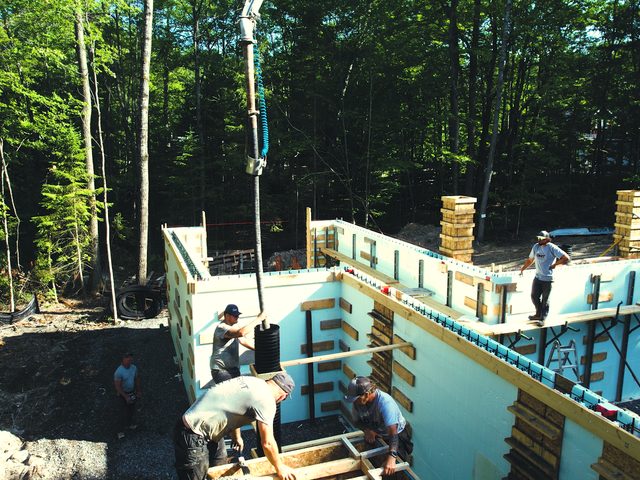
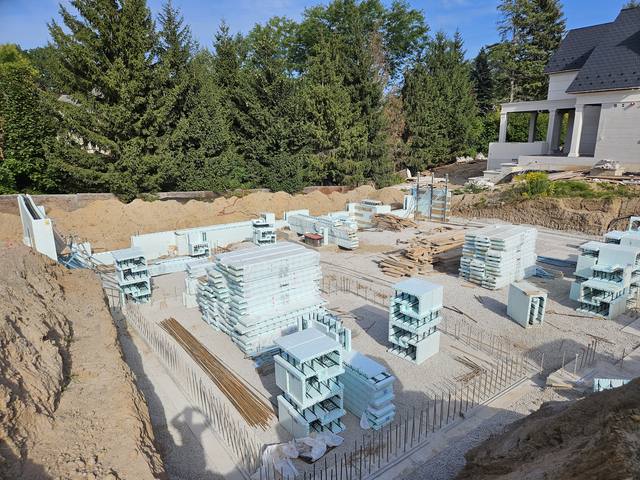
The up-front difference is not spread evenly across the job. It concentrates in the wall assembly itself: the forms, the concrete, the reinforcing steel and the crew hours to set and brace it.
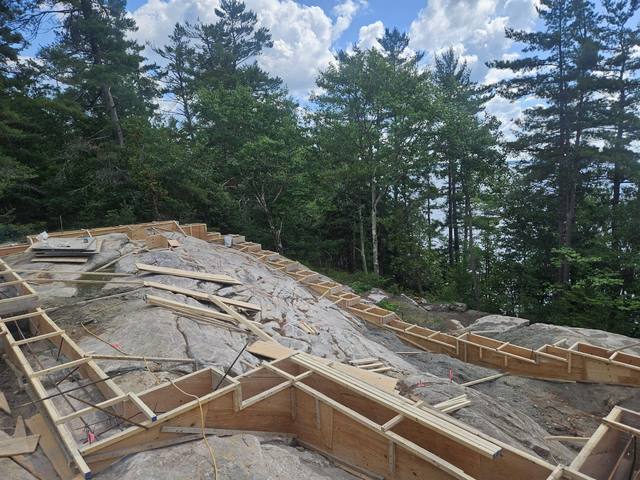
That is also why the premium is not a fixed percentage. A simple rectangular foundation with few openings is close. A walkout with steps, curves, large window openings and a complicated top-of-wall detail is further apart, because all of that is labour and bracing rather than material.
Anyone who quotes you a flat percentage for ICF over wood frame is describing a house they have already built, not yours.
What you stop paying for
An ICF wall arrives having already done several jobs that a wood-frame wall needs other trades and other materials to do.
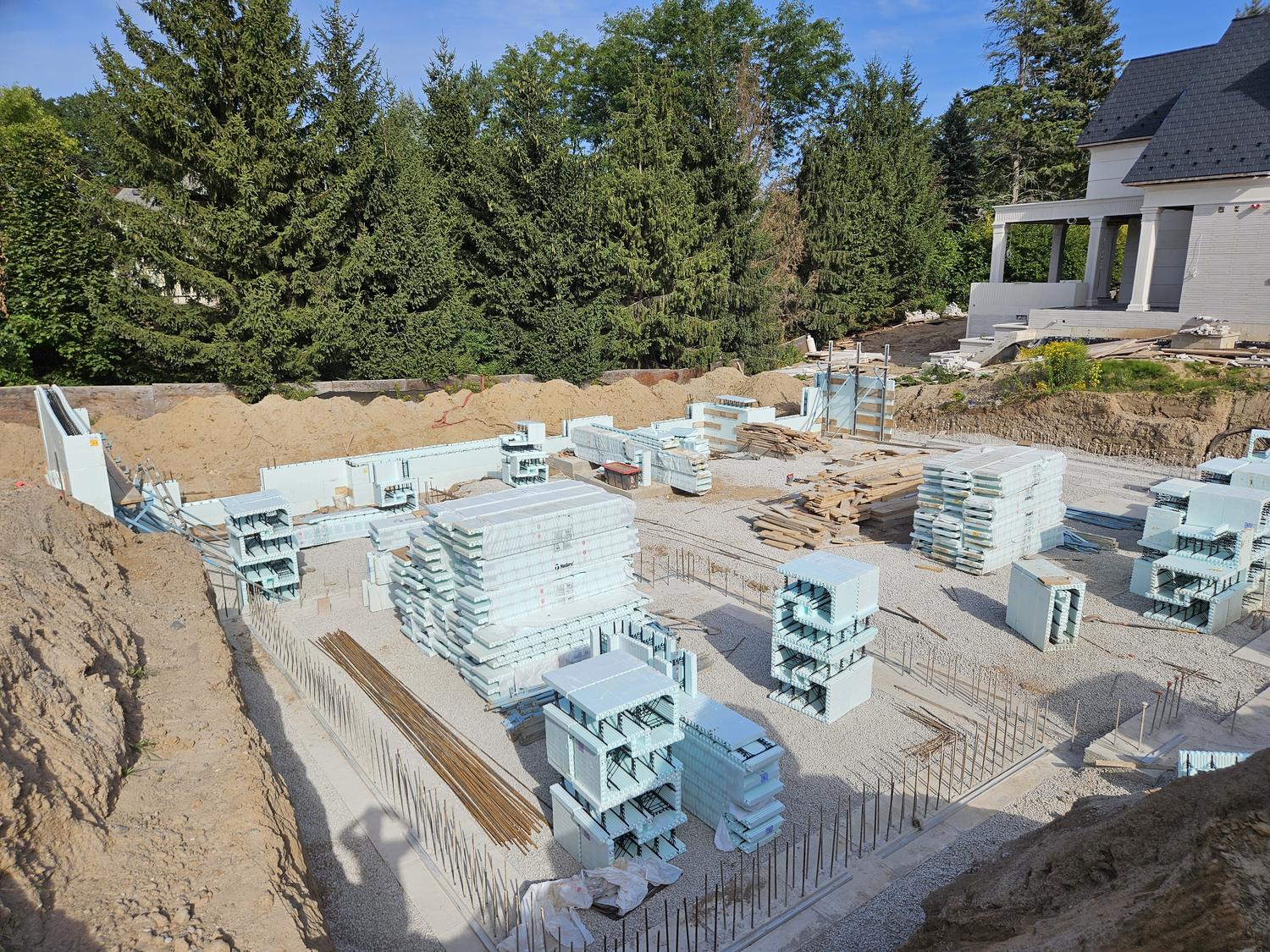
The structure, the insulation on both faces, the air barrier and the attachment points for interior finishes are all in the assembly. A conventional wall gets structure from framing, insulation from a separate trade, air sealing from a third operation, and strapping where it is needed.
So the fair comparison is never the wall alone. It is the wall plus the insulation package plus the air sealing plus the labour and scheduling to coordinate three trades instead of one. That comparison is a lot closer than the material quote suggests, and on some houses it closes entirely.
The part that shows up later
A continuously insulated wall with very little air leakage uses less energy to heat and cool. That is the whole argument for the assembly and it is a real one.
We are not going to put a number on your savings. It depends on the house, the windows, the mechanical system, how the building is used and what energy costs over the years you own it — and anyone quoting a precise figure without those is guessing.
What we will say is that the saving runs for the life of the building rather than the first winter, and that it is the reason the up-front comparison is the wrong place to stop.
Foundation only, or all the way up
Most of our work is foundations, and that is often the right call financially as well as structurally.
A below-grade wall is where ICF has the least competition: it is doing structure, insulation, damp-proofing substrate and air barrier in a place where getting any of those wrong is expensive to fix later. The premium over a poured wall plus separate insulation is small, and sometimes negative.
Going all the way up is a different decision. The performance case is strong, the cost case depends more on the design, and it is worth being deliberate rather than assuming that because the foundation made sense the whole envelope automatically does.
Schedule is a cost too
One crew setting, bracing and pouring a wall that arrives insulated is fewer handoffs than framing, insulating and air-sealing in sequence. Fewer handoffs means fewer gaps in the schedule where nothing is happening because the next trade is not available.
In cold-weather work that matters more, not less. A shorter critical path through the envelope is worth real money on a build that is trying to get closed in before the weather turns.
When ICF is not the cheaper answer
We would rather say this plainly than have you find out later.
If the building is small, simple and will be lightly used — an unheated garage, a seasonal structure with no conditioning — the performance you are paying for does not get used, and the premium does not come back.
If the design is highly irregular, with many angles, steps and openings, the labour component grows faster than the material component and the gap widens.
And if the budget is genuinely at its limit, a well-built conventional wall with a serious insulation and air-sealing package is a legitimate building. It is not what we specialise in, but it is not a failure either.
How we quote it
We price the actual wall on the actual drawing: linear feet, height, openings, corners, the top-of-wall condition and what the site will allow for access and bracing.
If you are weighing ICF against conventional, bring both and we will tell you where the difference lands on your house rather than on an average one. Our ICF foundations page sets out the real scope, and a quote costs nothing.