A winter concrete pour is ordinary work in Central Ontario, not a gamble. Concrete does not need warm weather to cure — it needs to not freeze before it has gained enough strength, and it needs the ground under it to be sound. Handle those two things and a January foundation is as good as a June one. Ignore either and you have a problem no amount of warm spring weather will undo.
The crews who dread winter are usually the ones who have not planned for it.
Why cold is actually a problem
Concrete does not dry. It cures — a chemical reaction between cement and water that generates its own heat and keeps going for weeks. That reaction slows down as the temperature drops, and below freezing it can effectively stall.
The real danger is narrower than “it got cold.” It is water inside young concrete freezing and expanding before the mix has developed enough strength to resist it. That expansion breaks the structure internally, permanently, and it does not heal when things thaw. Concrete that gets through its early strength gain protected is fine for the rest of the winter.
So the whole job is getting the first stretch after the pour right. Everything below is in service of that.
What changes on a winter pour
More than people expect, and most of it is decided before the truck arrives.
The mix. Water and aggregate can be heated at the plant so the concrete arrives warm rather than near freezing. Mix design can be adjusted, and accelerating admixtures shorten the time to the strength that matters. Cold-weather concreting is a governed practice in Canada — CSA A23.1 sets out the requirements, and it is not a matter of a crew’s preference.
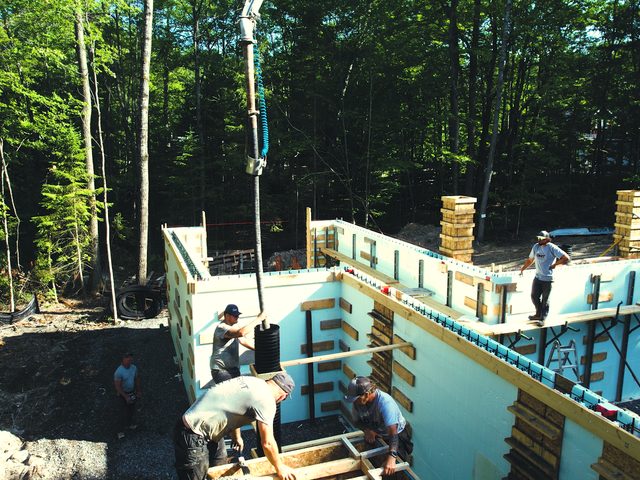
Protection immediately after placing. This is the part that shows up in photos of our winter sites: insulated blankets over everything that has just been poured, and hoarding with heat where the work needs to stay warm longer. It stays on for a defined period, not until somebody feels like pulling it off.
Timing the day. Pours get scheduled to give the concrete as much of the day’s warmth as possible, and access matters more — a pump truck needs a plowed, solid setup pad, and a rural or cottage-country lot in February is not the same site it was in October.
The ground matters as much as the air
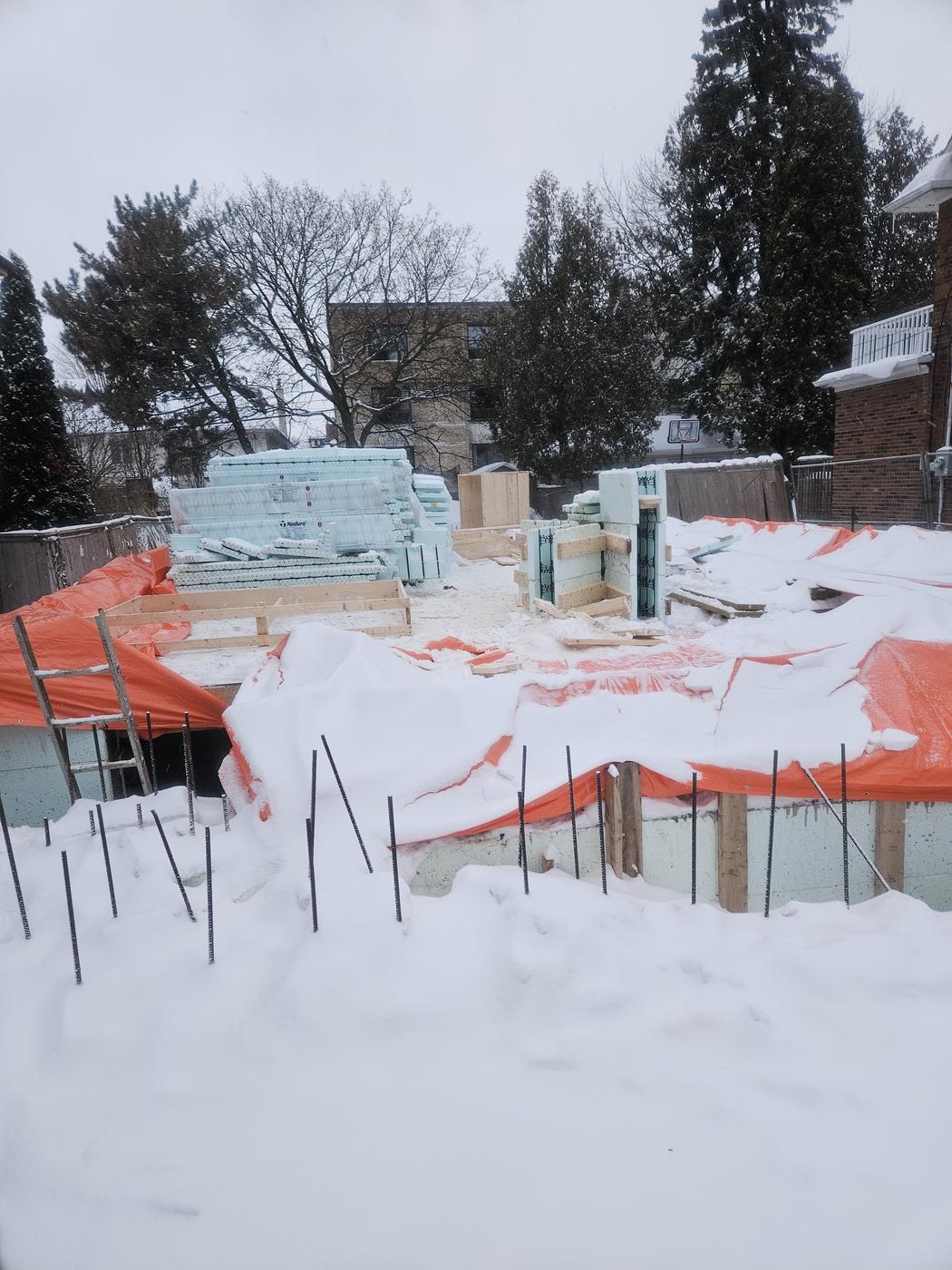
You cannot pour onto frozen ground. If the subgrade freezes and then thaws under a footing, it moves, and the footing moves with it. Frozen soil is also not a stable bearing surface, whatever it feels like to walk on.
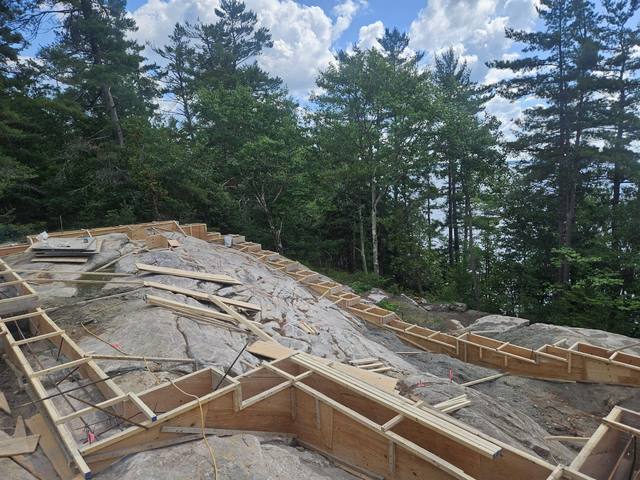
So excavations get protected too — covered and insulated to keep frost out of the bearing surface between excavation and pour. On rock, the problem changes shape: bedrock will not heave, but ice in the seams and snow over the surface have to be cleared before anything gets scribed or pinned to it, which is its own job in January.
This is the part that most often decides whether a winter start is sensible on a specific lot, and it is a site-by-site answer rather than a general one.
Where ICF has a genuine winter advantage
This is not a marketing line, it falls out of the assembly.
An ICF wall is poured into forms made of insulating foam, and those forms stay on. So the moment the concrete is placed, it is already wrapped in continuous insulation on both faces — exactly the protection a conventional wall has to have added to it with blankets and hoarding. The curing concrete holds its own heat in, which is what you want it to do.
That does not make winter free. Footings, slabs and anything with an exposed top surface still need conventional protection, and the ground rules above still apply in full. But the walls themselves arrive with a real part of the answer built in, which is one reason ICF foundations suit cold-climate building — see also what R-value actually tells you for how the same continuous foam behaves once the house is finished.
What winter really costs you
Being straight about this is more useful than pretending the season is free.
Winter work costs more. Heated mix, admixtures, blankets, hoarding, fuel, snow clearing and slower days are real line items. Progress is less predictable because a storm is a storm.
What it buys is a season. A foundation poured in February means framing can start in spring rather than the whole project waiting for the ground to thaw and joining the queue behind everyone else who waited. For a build with a move-in date attached, that trade is often worth making — and it is a trade, which is the point. Anyone who tells you winter costs nothing extra is selling.
How DMT works through a Central Ontario winter
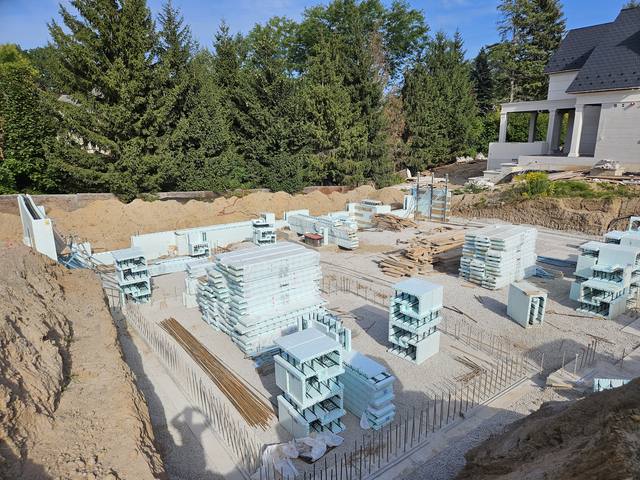
Winter building is normal here. Our own sites from past Januaries show it — pump trucks set up in the bush, frost blankets over rock excavations, ICF going up through the snow on urban infill lots.
The below-grade scope stays with one crew either way: layout and excavation coordination, footings, pads and piers formed to the site, weeper and interior stone so drainage is in before the walls go up, then the insulated concrete walls braced, aligned and poured in controlled lifts. In winter, the protection plan sits inside that same scope rather than being somebody else’s problem on the day.
Frost walls and stepped runs on sloped and rocky sites are routine work, and the same waterproofing and drainage detailing applies — see do ICF foundations need waterproofing.
If you are deciding whether to start this winter or wait for spring, that answer depends on your lot, your access and your timeline. Tell us about the project and we will give you a straight read on it, with a free itemized quote.