Moisture-resistant backfill is a slightly misleading name, because no soil resists moisture. Rain soaks into every kind of ground. What separates good fill from bad is what it does with that water next: whether it lets it drop straight down to the drain at the footing, or holds it against the wall, where it pushes, soaks in and freezes.
That is why the fill matters more than most people expect. Once it is in, it is part of how the foundation handles water, whether anyone planned it that way or not.
What Moisture-Resistant Backfill Actually Means
Picture two buckets. One is full of clay, the other full of clean crushed stone. Pour a litre of water into each. The stone lets it straight through to the bottom. The clay takes it in, swells, and keeps it for days.
A foundation wall sees the same thing every spring. Fine soils like clay and silt hold water in the tiny gaps between their particles. Coarse, clean granular material has gaps too big to hold much, so water runs through it under its own weight. In practice, moisture-resistant backfill means the second kind: fill that drains freely and carries water down to the weeping tile instead of storing it beside the wall.
The building code describes the same material in plain numbers. The stone over a foundation drain has to be crushed stone or other coarse, clean granular material, at least 150 mm deep on the top and sides, with no more than 10% of it fine enough to pass a 4 mm sieve. That last figure is the important one. It is the fines that clog the gaps and turn a drainage layer back into a sponge.
Why Water Held in the Fill Is the Real Problem
Water sitting in the fill does three kinds of damage, and none of them needs a leak to start.
- It pushes. Saturated soil presses on the wall with the weight of the water in it, not just the weight of the dirt. Where that hydrostatic pressure occurs, the code stops asking for dampproofing and requires full waterproofing.
- It soaks. Water held against a wall for weeks finds every joint, tie and penetration. The longer it stays, the more chances it gets.
- It freezes. Wet fine soil freezes into layers of ice, called ice lenses, that grow and lift as they form. Against a wall, that frost can grip the surface and push sideways.
The code is blunt about the frost problem. Backfill may not contain material that forms ice lenses in amounts that would damage the building, with an exception for cast-in-place concrete walls, which are strong enough to take it. That exception is about the wall surviving, though. The water is still there, still pressing, and still looking for a way in. A wall that can stand up to wet clay is not the same as a basement that stays dry beside it.
What the Code Asks of Moisture-Resistant Backfill
Most of the code's backfill rules come down to protecting what is already on the wall and keeping water moving. The short version:
- Do not damage the wall going in. Backfill has to be placed so it does not damage the foundation wall, the drain tile, the drainage layer, any insulation on the outside, or the waterproofing.
- Keep rocks and junk away from it. Within 600 mm of the foundation, the fill has to be free of debris and of boulders larger than 250 mm across.
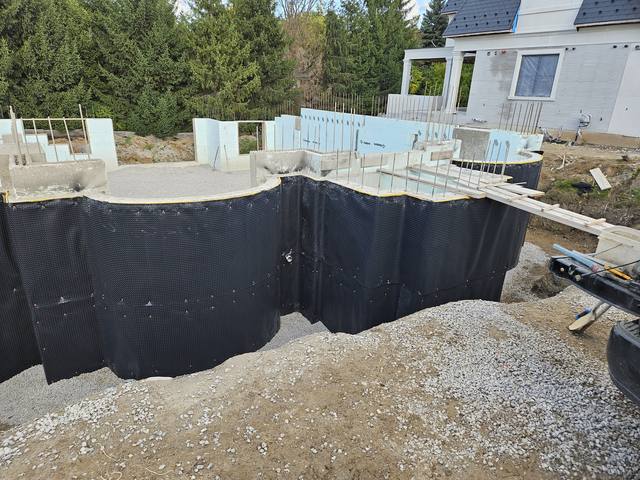
- Give water a path down. Every foundation wall around the building's interior needs drainage at its base. When the insulation on a wall runs more than 900 mm below grade, the wall also needs a drainage layer against it: 100 mm of free-draining granular material, mineral fibre board, or a system shown to work as well. Whatever forms that layer has to reach all the way down to the footing.
- Send the drain somewhere. Foundation drains have to discharge to a sewer, a ditch or a dry well, not just into the bottom of the hole.
Read together, those rules describe moisture-resistant backfill without ever using the phrase. Water should reach the wall, drop through clean material, and leave through the drain, and nothing that goes into the hole should damage the layers that stop it on the way.
Why ICF Raises the Stakes on Moisture-Resistant Backfill
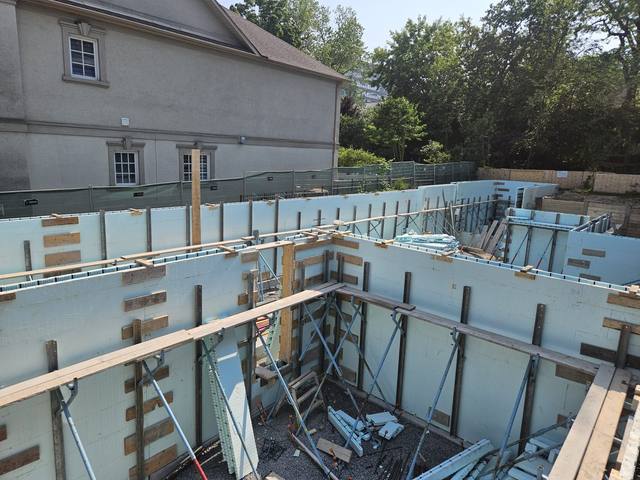
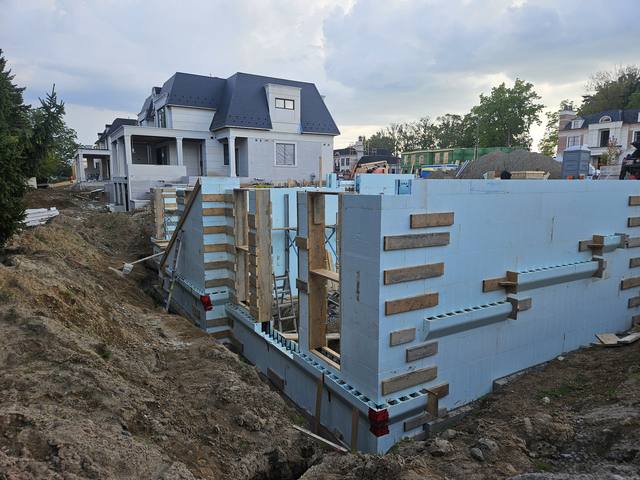
An ICF basement wall is insulated from the footing to the top of the wall. Foam faces stay on both sides of the concrete for good. That puts it squarely in the code's drainage-layer rule, and it puts the foam and the waterproofing over it directly in the path of whatever comes off the excavator bucket.
A 300 mm boulder dropped from height does not hurt the concrete core. It does gouge the foam and tear the membrane, and nobody sees the damage once the hole is filled. The code lists externally applied insulation and waterproofing as things backfill must not damage for exactly that reason. Clean granular fill placed in lifts is gentle on both. Lumpy site soil full of rock is not.
The other ICF-specific rule is about timing. Flat ICF foundation walls have to be supported at the top and at the bottom. Where the wall needs that support, or the concrete has not reached its strength, it has to stay braced until the support is there. In practice that means the floor goes on first. A floor anchored to the top of the wall with anchor bolts counts as that support at the top. Backfill a tall wall before it is tied in, and it is holding back the whole hillside on its own. Our post on insulated concrete form bracing covers what keeps a wall straight until then.
The Order Matters More Than the Material
Good fill cannot rescue a foundation where the drainage was skipped or the waterproofing went on late. The sequence is what makes the fill work.
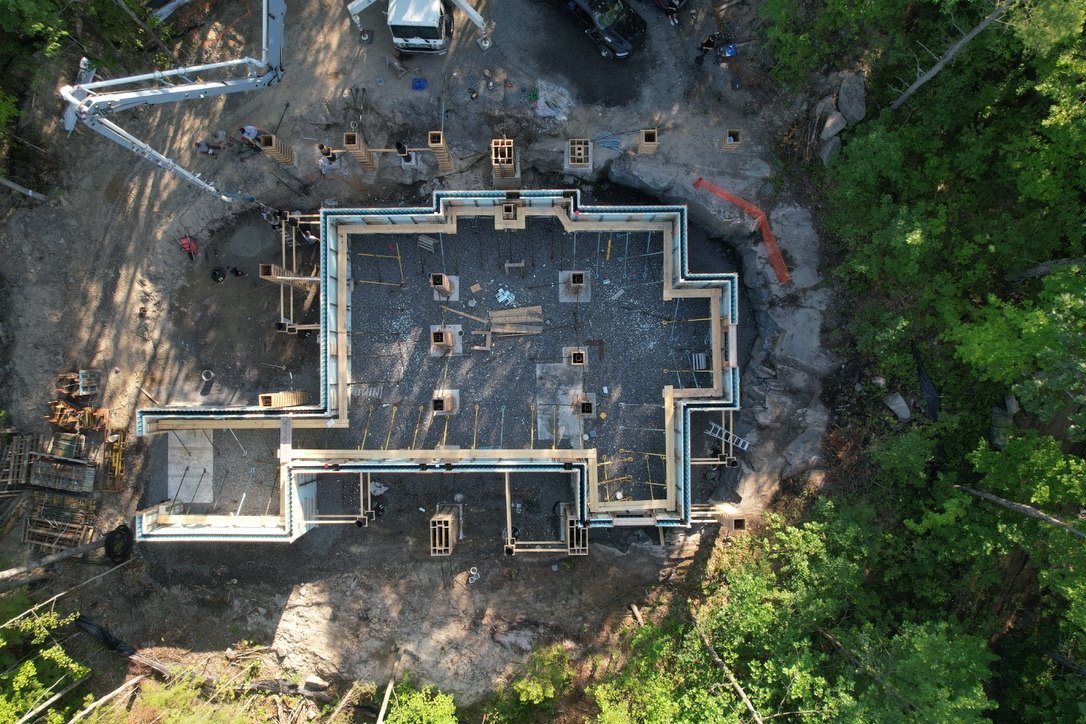
On our foundations, the weeper and interior stone go in first, so drainage is in place before the walls go up. The ICF walls are braced, aligned, poured and checked at every lift. Exterior waterproofing and drainage are applied by our own crews as part of the same foundation scope, in the right order rather than bolted on afterwards. Builders who bring us in for the below-grade stage take over a level, square, backfill-ready foundation.
Backfill-ready is a short word for a checklist. Before any fill goes against the wall:
- The drain is in and covered. Weeping tile at the footing, wrapped in clean crushed stone, running to somewhere water can leave.
- The waterproofing is finished and intact. No torn membrane, no gaps at corners or penetrations, applied to the ICF manufacturer's instructions, which the code requires for waterproofing on ICF walls.
- The wall can take the load. Concrete at strength, and either the floor anchored on top or the bracing still standing.
- The finished grade is known. The wall has to finish at least 150 mm above the final ground level, so the grade line needs to be settled before the fill decides it for you.
Our article on whether ICF foundations need waterproofing goes through the layers on the outside of the wall in more detail.
Grade It for After It Settles
Every backfill settles. Loose fill pushed into a trench takes a season or two to find its level, and it sinks most right beside the wall, where it was deepest and hardest to compact.
The code writes that into the rule: backfill has to be graded so water drains away from the foundation after settling, not just on the day the machine leaves. A grade that slopes away in June can be a shallow dish against the wall by the next spring, collecting roof water and feeding it straight down the outside of the basement. The site as a whole has to be graded so water does not pond at the building either.
So the surface matters as much as what is beneath it. The clean granular fill against the wall carries water down to the drain. The finished grade above it should send rain and snowmelt away before most of it ever gets there. Moisture-resistant backfill does its best work when it only has to handle what gets past the grade.
Where the Money Usually Goes Instead
When a basement has a water problem, the reflex is to add another layer to the wall: a second drainage board, extra waterproofing, a membrane under the slab. On ICF foundations, that is the most common thing we talk people out of, because usually none of it is needed.
A foundation stays dry because of a system. Waterproofing on the wall, a drain at the footing that actually discharges, clean fill that lets water reach it, and a grade that keeps most of the water off in the first place. Doubling one layer does little for a foundation where another one is missing. Getting the fill and the grade right protects the layers that are already there.
If you are planning a foundation and want to know what yours needs, our ICF foundations page lays out the full scope, and a quote request is the place to start. We are certified Nudura installers, our own crews do the footings, the walls and the waterproofing, and we will tell you plainly what the wall needs and what it does not.